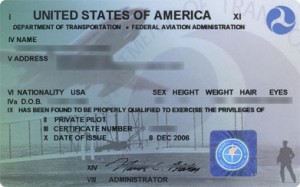
Many people dream of a career as a pilot but do not know how to go about it. However, there are some basic eligibility criteria and some steps which can help you to become a pilot and a different set of methods by which you can become a commercial airline pilot. This career is popular due to the glamor and prestige associated with it. A career as an airline pilot is also exciting and highly rewarding both in terms of money and job satisfaction. The actual process of becoming an airline pilot takes a long time and a lot of dedication. There are many precise requirements and it is quite expensive to establish a career as a pilot. For some positions you need 10 years of flying experience even to be able to apply. Let us look at some steps you can choose to follow your dream.
Preliminary requirements
The first requirement is a four year college degree which is necessary to be able to fly for a major airline if not for the regional airlines. It is advisable to get a bachelors degree in science with an emphasis on aviation. Then comes the airline pilot training which is expensive and intense.
Find a flying school
Look around your local area for a good flying school. The minimum flight time requirement of the FAA is 40 hours but if you take an average it is about 60 hours. It is best to opt for schools which have an FAA oversight if you really want a training program that is highly regimented.…
After completing the number of hours required in flying school the next thing to do is to obtain a first class medical certificate from an FAA medical examiner. It is best to apply for a first class when you apply for medical certificate for the first time so that you can be sure that you should go ahead and invest the time and money in a new career.
Advanced requirements
Once you have earned the private pilot license the next step is to work on commercial certification and instrument rating. For instrument rating you have to complete 50 hours of cross country Pilot in Command and 40 hours of simulated or actual condition with instruments. The commercial certificate requires 250 hours total flying time, 100 hours of PIC, 10 hours of dual instruction in complex aircraft and 50 hours cross country. All pilots who get a salary as commercial pilots transporting passengers or cargo need to get a commercial pilot license along with instrument rating from the FAA. Even helicopter pilots need to get a commercial pilot license with helicopter rating.
All in all the entire process of becoming a commercial pilot is a long and tedious one. You need to be really tough mentally and physically and highly determined to become a commercial pilot. However, once you become a commercial pilot the rewards that you get in term of money and job satisfaction are worth the time and money spent in creating this career.
As with fixed wing aircraft, in order to fly a helicopter you will need to start off by obtaining your private pilot license. You will receive a rating to fly rotor wing aircraft (helicopters) which can be obtained without ever flying a fixed wing aircraft.
Depending on your aviation goals, where you go from there is up to you. If you’re content to use your license for private purposes, go out and enjoy it but if you’re looking for an exciting and varied career, getting your commercial helicopter license will be your next step.
Following this, you can work towards either your Certified Flight Instructor License (helicopter/rotorcraft) and then an Airline Transport Pilot (helicopter/rotorcraft).
There is some cost and effort required to get your helicopter license, so we recommend the first step you take is to organize an introductory helicopter lesson or trial flight. You can do this at any helicopter flight training school.
Helicopter License – Private Pilot License Requirements (FAA Part 61)
As the holder of a private helicopter license you are entitled to carry passengers and their baggage so long as you are not receiving any kind of remuneration for the flight (ie. the flight is not for commercial hire – a commercial helicopter license is required for this purpose).
You must meet the following general requirements:
• You must be at least 16 years old to become a student pilot and do any solo flights.
• Before you can take the check ride you must be at least 17 years old.
• Your skills in English comprehension reading and writing and speaking must be satisfactory.
• You must pass a medical exam administered by an FAA flight surgeon and hold an FAA medical certificate before your first solo flight.
• You must have logged at least 40 hours of flight time and completed the aeronautical requirements detailed below.
• You must have successfully completed the ground instruction component taught by a ground or certified flight instructor.
• You must score at least 90% or better on the written FAA private pilot helicopter knowledge test (you are not required to take the written exam if you already hold a private pilot license for fixed wing aircraft).
• You must pass your check ride. This consists of an oral and practical flight test and is administered by an FAA designated examiner.
Required aeronautical experience. You will have completed at least 40 hours in helicopters. Included in this time will be solo and dual flight instruction time:
• 30 hours dual flight instruction with a Certified Flight Instructor. This will include the following:
• 20 hours of dual flying prior to solo
• Dual cross-country flight training (minimum three hours)
• Three hours of dual instruction at night. This will include at least 10 take-offs and landings at the airport and one cross-country flight no less than 50 nautical miles.
• With the 60 days preceding your check ride you must have received a
Helicopter License Cost – Private
Aviation publications and the Internet are rife with advertizements for flight training schools offering reduced prices for the completion of your final helicopter test ride. As always, there is a catch. Most of those offering the lowest prices base the cost for obtaining your private helicopter license on the published FAA minimums. So what’s the difference between these advertisements and flight schools advertising higher costs? The truth is very few students ever complete their PPL within the minimum time is mandated by the FAA.
More reputable flight training schools based the estimated costs on the national average time taken to complete the private pilot license.
Below is a breakdown of the realistic and approximate costs however you should talk directly to your flight training school for accurate pricing:
55 hr R22 dual
$17,600
10 hr R22 solo
$2,00
40 hr ground, books
$3,720
FAA exam
$500
Total
$24,320
Commercial Helicopter License Requirements (FAA Part 61)
Helicopter License Cost – Commercial
As mentioned above, advertized costs vary depending on whether they are based on unrealistic FAA minimum hours or the national average for students to complete their license. Below are realistic costs for a commercial helicopter license based on the national average for time taken to reach competency for the check ride test.
Commercial/Instrument/CFI
45 hours instrument R44
$22,455
50 hours R22
$16,500
50 hours ground school
$3,500
FAA Exams
$1,500
Total
$43,955
Instrument Instructor Rating
10 hours Instrument R44 dual
$5,000
20 hours ground school
$1,370
FAA Exam Fee
$500
Total
$6,870
Don’t forget to factor in the cost of completing your private license as well when calculating the total costs involved with a commercial helicopter license. See table below for total costs:
Overall Total for Commercial Helicopter License All Ratings
Private License
$24,320
Commercial/Instrument/CFI
$43,995
Instrument Instructor
$6,870
Total Average Cost
$75,185
Certified Flight Instructor Requirements (CFI)
Once you have your commercial helicopter license, becoming a certified flight instructor in rotor-craft is a great way to advance your career.
Many helicopter pilots choose this option as it’s a way of building your logged hours required for further advancement in the profession and getting paid for it. Aside from this, becoming an instructor is a rewarding and challenging career option in itself. You are responsible for developing a high level of competency within your student and also responsible for the safety of them and the aircraft.
The Certified Flight Instructor (CFI) license unlike other FAA licenses must be renewed every two years in order that your licence remains valid and you may continue working as a flight instructor.
Requirements/Eligibility for CFI License
• You must have turned 18 years old.
• You must be proficient in your ability to understand you must be proficient in your ability to speak and understand read and write English.
• You must hold a valid Commercial rotorcraft or helicopter license or a ATP rotorcraft helicopter license.
• You must hold an instrument rating for helicopters/rotorcraft.
• You must score a passing mark in the written knowledge test for CFI helicopter.
• You must complete and pass the Fundamentals of Instruction written knowledge test.
• You Must Complete and Pass a Practical and Oral Test (Check Ride)
Aeronautical Experience Requirements (CFI)
• You must have at least 15 hours logged in as pilot in command and helicopter and receive tuition in the areas of instructing. These are listed in part 61.185 and 61.187.
Get Paid While You Learn How to Become a Helicopter Pilot
For some people a career in the military is a great way to get your pilot license and learn how to fly a helicopter. The Air Force Pilot Training Program and the Navy equivalent are both excellent means to get your helicopter license and get paid at the same time.
Helicopter News
Angelina Jolie buys Brad Pitt helicopter flying lessons. Jolie forked over almost 1.6 million on a helicopter and flying lessons for her former husband, then fiance, Brad Pitt to get his helicopter license….
Before investing in a career decision it’s important to investigate pilot salary levels and get a good understanding of your earning potential as a commercial pilot. It’s also important to know what the demand for your newly acquired skills will be as a new pilot.
The good news is that the aviation industry is set to grow strongly over the next two decades at least, with an increasing demand for commercial pilots of all types.
There are many factors which dictate the huge range in commercial pilot salaries, but by training to become an airline pilot or other commercial pilot you can ultimately earn a great salary.
Factors impacting on commercial pilot salary are:
Years of experience as a commercial pilot
The type of aircraft being flown
Type of work (corporate charter pilot, airline pilot, helicopter rescue pilot, scenic flights etc)
Employer (Pilot pay rates vary among airlines)
Which state you’re employed in (USA) or which country you’re employed in
For your first few years as a commercial pilot you should not expect a huge salary. These years are best enjoyed and looked at as an opportunity to gain experience and log flight hours.
In 2010, according to the United States bureau of labor statistics airline pilots, copilots, and flight engineers and a median annual wage of $103,210 with the highest 10% of pilots earning over $166,400 in less than $54,900 for the lowest 10%.
What is a median salary? The median salary is the point where 50% of pilots earn more than this figure in 50% of pilots earn less.
Commercial pilots earned an annual median wage of $67,500. Among commercial pilots, the highest 10% earned over $119,650 while the lowest 10% and less than $34,860.
As you can see, for the first few years of your career you may earn little more than $35,000-$40,000, however if you can stick it out past these rookie years and get some good experience you will have the potential to and a very handsome salary. With that said, if you’re only motivation for becoming a pilot is to make money there are probably much better and easier ways.
Other Benefits Available to Commercial Pilots
In many instances, as a professional pilot you will be eligible for a number of other benefits over and above your annual salary.
Some of these are likely to include:
flexibility of scheduling
company retirement benefits
healthcare benefits
free travel for you and your family
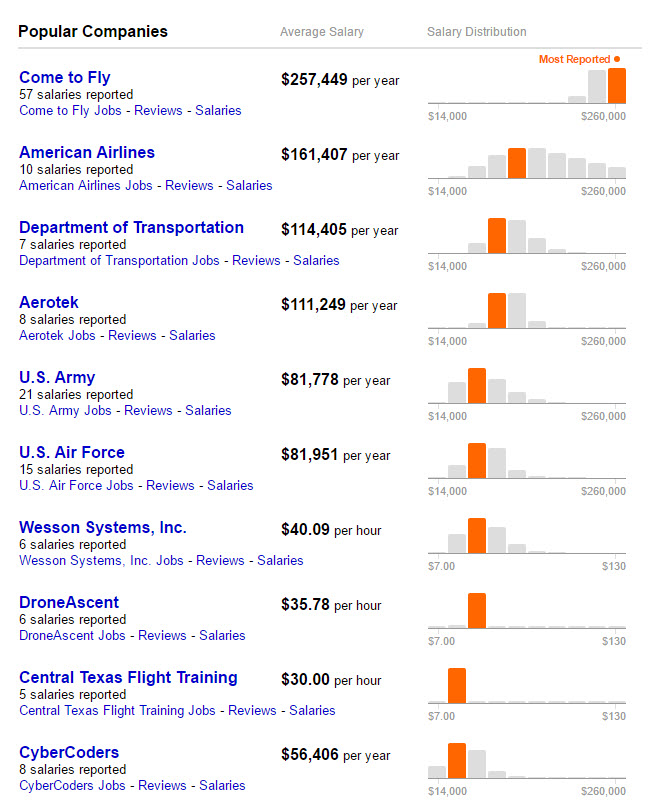
The following salary data was prepared by indeed.com and is relevant to the United States of America. The pilot salaries stated are an average of thousands of jobs advertised throughout the country.
FAA Medical Examiners are physicians designated by the Federal Aviation Administration and given the authority to perform flight physical exams. They are otherwise known an AME or Aviation Medical Examiner.
In countries other than the United States, they have authority under the local aviation authority. The Flight Surgeon is the equivalent of an AME in the military.
The International Civil Aviation Organization has developed a specific set of medical guidelines to use as a determination of whether an individual is fit to act in the capacity of a pilot.
FAA Medical examiners are not employed by the Federal Aviation Administration, however are private physicians who are interested in aviation medicine and have gone through the required certification process. A national process oversees the selection, authorization and training of all Aviation Medical Examiners in the United States.
As a Pilot you may choose any designated AME to perform your flight physical exam at any time. You can receive a third class or second class medical certificate from any AME so long as you meet the health guidelines, however if you require a first class medical certificate (air carrier operations pilots) you will require the services of a designated Senior Aviation Medical Examiner.
Who must hold an FAA Medical Certificate?
An appropriate and current medical certificate must be maintained by any individual acting as pilot in command or any other necessary crew-member of an aircraft (exceptions are for ultralights, gliders, and free balloons). This includes airline, commercial and private pilots plus student pilots with solo flight privileges.
Different Classes of Airman Medical Certificate
FAA Medical Certificates come in three different classes. The class of medical certificate you require will be determined by what type of pilot license you hold. The least stringent is the Class 3 Medical Certificate followed by the Class 2 Medical Certificate and finally the most difficult to get the Class 1 Medical Certificate.
Class 3 FAA Medical Certificate
In order to exercise your privileges held under a Student Pilot Certificate, Recreational Pilot Certificate, Private Pilot Certificate or Flight Instructor Certificate you are required to hold a Third Class Airman Medical Certificate. If you are under 40 years old, the 3rd class certificate is valid for 5 years (60 calendar months) or 2 years (24 calendar months) for those pilots aged over 40. This can be issued by any FAA medical examiner.
Class 2 FAA Medical Certificate
Commercial pilots performing non-airline duties such as corporate or crop dusting pilots are required to hold a 2nd Class Airman Medical Certificate. This is valid for 12 months from the date of issue and can be issued by any designated FAA medical examiners.
Class 1 FAA Medical Certificate
By far the most difficult to maintain and qualify for, all airline transport pilots are required to hold First Class Airman Medical Certificate. If the pilot is 40 years old or over he or she will be required to update their medical every 6 months. For those under 40, the 1st class medical is valid for 12 months. This medical certificate can only be issued by a Senior Aviation Medical Examiner.
As a pilot, it’s important you get the right pilot insurance whether flying is purely a hobby or a career. Depending on your flying activities there are a large number of different insurance products to take into account.
Additionally, as you may have noticed when you fill in the application forms for life insurance or income protection insurance most will require that you declare whether you fly in non-scheduled aircraft which covers any light aircraft non run by an airline transport company. If you’re a private pilot and looking to gain life insurance or income protection insurance for your “Monday to Friday” job, there are specialist companies who will provide cover for you, however many of the mainstream insurance companies will not.
There are a number of insurance companies around the world which specialize purely in insurance for pilots (whether recreational or commercial), but sometimes it’s hard to know what insurance is available and which product is most appropriate for your needs. We recommend you contact a range of companies regarding pilot insurance and speak to their qualified staff who can advise you appropriately.
Below we will briefly discuss some of the different insurance products particular to pilots and their specialized needs.
Aircrew Loss of License Insurance
One of the biggest concerns for most commercial pilots is loss of license, and therefore loss of income. Loss of Pilot License is a disastrous situation given the years of training and the cost of acquiring a commercial pilot license, not to mention the financial impact on the family unit.
Many pilot insurance companies cover for a wide range of pilots including airline pilots, flight instructors, helicopter rescue pilots and both fixed wing line pilots and helicopter line pilots should you be in the unfortunate position of losing your license, whether that be to ill health or a breach of aviation regulations.
Most insurance companies offering products for pilots will have an online application for to gather information required to provide a quote for insurance premiums. Simply fill this out and you will be able to receive the right advice and a quote on appropriate pilot insurance.…
Regardless of whether you are aiming toward a private pilot license or your commercial pilot license you will need a course of flying lessons to gain proficiency as a pilot.
Through primary and intermediate flight training you will gain and refine your basic airman-ship skills to the level required to qualify for your private pilot license.
Flying lessons are provided by numerous flight training centers and aero clubs throughout the United States and other countries.
Choosing Your Flight School
A qualified flight instructor will provide lessons in the air and also during ground school. Your instructor will be an experienced pilot who holds a commercial pilot license with a flight instructor rating. It’s important to find someone you trust and feel comfortable with as they (as well as you) will be responsible for your success as a pilot.
Your first goal should be to organize an introductory flying lesson or introductory flight so you can be sure that getting your pilot license is something you want to follow through with. This will also give you an opportunity to get to know your instructor. Your first flying lesson will probably only last half an hour or so, but will give you the opportunity to take the controls of the aircraft and experience the sensation of flying a small plane. Your introductory flight is able to be logged in your pilot log book and counts towards the time required to obtain your license.
Helicopter Flying Lessons
If you goal is to learn to fly a helicopter, you will need to find a flight training center that offers helicopter lessons. Almost everything that applies to finding a flight training center for fixed wing aircraft also applies to helicopters. Find a center and instructor you can work with and trust. Much of the basic airman ship and ground school study covered when gaining a private pilot license for fixed wing aircraft, also applies to flying helicopters and will be much the same.
Cost of Learning to Fly
Pilot license cost varies a little depending on where you take your flight training and how quickly you learn to operate the aircraft to the level required to successfully pass your “check ride”, but we can still break down the costs involved to give you a ball park figure of how much you will need to pay.
Factors you need to consider which will significantly impact your total costs are:
Price per hour charged by the flight instructor
Price per hour for the aircraft used for tuition (this will be significantly more for helicopters)
Depending on where you live, these two figures can vary significantly. In addition to these figures there are other factors which can impact your total cost such as the skill of your instructor. If they aren’t good at teaching, it will take you much longer which makes it harder to get your pilot license in a cost effective manner.
A realistic figure to spend on obtaining your private pilot license for a small fixed wing aircraft is around $8,000 – $9,000, incorporating around 50 hours of flying time. This is of course dependent on all the factors discussed above and where you are in the country. For example, in some parts of the country the private pilot flight test only costs around $250 while in Phoenix AZ it is over $400. All of these little differences can add up to hundreds of dollars.
Tips to Save Money
One of the best ways you can save money getting your pilot license is to do a lot of the ground school study yourself in your own time. This negates the need to pay an instructor to teach you what you can learn independently. There are a number of self study courses available which will cut down the amount of ground school time you require.
Remember, that “flashy” and new is not always best. There are many flight training schools dotted around the country which look very attractive, but when you get involved you may find they fall far short of your expectations. Make sure you do your homework first. Talk to other independent pilots who have done their pilot training and had flying lessons through the school and listen to their testimonials and ask lots of questions, particularly around how long it took them to complete their training.
Home Study Courses
There are many good home study courses available for around $300. Some flight schools may request you purchase their own DVD study packages at a much higher cost – ultimately you must do what you think is right for you. All materials, regardless of who provides them are based on the information provided in official publications made by the FAA and it is that same material which is used for your practical flight test and makes up the foundation of your flying lessons.
When most people talk about having their pilot license, they are referring to the private pilot license or PPL. It allows you to act as the “Pilot in Command” of an aircraft for non-commercial purposes.
The International Civil Aviation Organization (ICAO) governs the requirements for obtaining the license, however they are implemented quite differently from country to country. In the United States the implementation of the requirements is overseen by the FAA (Federal Aviation Administration).
What is a Private Pilot License?
Compared to the sport or recreational pilot certificate, having a private pilot license poses far fewer restrictions on the types of aircraft you can fly and also the places you can fly or destinations you might seek out.
Legally you must be 17 years old or over to obtain your pilot license however this doesn’t mean you can’t start your training much earlier. There is no age restriction on when you can start your pilot training, so long as you can touch the rudder pedals. You will not be able to fly solo however until you are at least 16 years of age. Going solo is part of the steps involved in getting your full license.
The private pilot license offers a lot more opportunities than the recreational certificate, however on the flip side it has a few more requirements and demands. On this page we’ll discuss the following:
What a private pilot license offers
Steps to obtaining your license
License Requirements – Time and Tests
Private Pilot License Cost
Private Pilot License Requirements
Under international ICAO law, a full private pilot license is achieved once a course is completed which includes a minimum of 40 hours logged flying time (in some countries such as Spain and the UK this is 45 hours). Additionally, a passing mark is required in 7 written exams, a minimum of 10 hours solo cross country flying (time is cumulative) and the successful demonstration of flying skills to an accredited examiner. This final flight test will also include an oral exam.
Don’t be daunted by the thought of exams and tests. Many people have completed their license before you and with the right pilot training you will feel confident to pass with flying colors too.
Although 40 hours of logged flight time is the minimum required (35 if training under Title 14 of federal code part 141 in the US) most pilots will require between 50 and 70 hours of flying time to be confident enough to complete their certification tests.
Medical Requirements for Private Pilot
As a private pilot you will only be required to complete a third class medical certification. This is the least involved in medical examinations for pilots. The third class medical is required by any student pilot exercising solo flying privileges and anyone wishing to obtain a recreational or private pilot certificate. In order to qualify you must meet the following requirements:
Mental State: you must not have any diagnosis of severe personality disorder, psychosis, or bipolar disorder.
Near Vision: with or without correction a score of 20/40 or better must be obtained in each eye separately. This is measured at a distance of 16 inches (410 mm).
Color Vision: you must demonstrate the necessary level of color perception in order to perform air man duties in a safe manner.
Distant Vision: with or without correction you must obtain a score of at least 20/40 or better in each eye separately.
Your blood pressure reading must be under 155/95 (systolic/diastolic).
The two years prior to your medical must have been free of any alcohol dependence or dependence on any pharmacological substance.
Hearing: demonstrate a successful pass of an audio metric test. Alternatively this may be demonstrated by being able to hear a regular conversational voice in a quiet room at a distance of no less than 6 feet with your back turned to the examiner.
Ear, Nose, and Throat: be free of any ear condition or disease which may cause vertigo or a disturbance of speech or equilibrium.
If you are over the age of 40 your third class medical will expire two years from the date of issue on the last day of the month it was issued. If you are under the age of 40 same conditions apply, however your medical will remain valid for five years from the date of issue.
Limitations and Add-ons – Can I Fly a Jet?
Having your private pilot license gives you almost unlimited freedom to wander the friendly skies, however there are some restrictions in place which limit where and when you can fly.
Immediately after your private pilot certificate is issued, you are qualified to be pilot in command of any single engine plane with fixed gear (undercarriage) with a power output of less than 200 HP in VFR (Visual Flight Rule) conditions, either during the day or hours of darkness. Many of these limitations can be overcome with additional training and ratings being added to your license.
Some of the different ratings available to the private pilot are:
Instrument Rating (IFR)
Multi Engine Rating
Tail Wheel
Retractable Landing Gear
Single Engine Sea
Jet Rating
Aerobatic Rating
Non Fare Paying Passengers
As previously mentioned, having a private license allows you to carry non-fare paying passengers. With this said, it is acceptable to split the costs of running the aircraft for the flight with your passengers if that’s the arrangement you come to i.e. your passengers may make a contribution to the cost of fuel and hire of the aircraft etc. without you being in violation of the law.
Visual Flight Rules (VFR)
Visual Flight Rules are a group of rules under which a pilot must operate his or her aircraft. They stipulate that weather conditions must be generally clear enough for the pilot to see where the aircraft is flying. To be more specific, the meteorological conditions must be above the basic VFR weather minimums.
These are specified in the rules of the aviation authority relevant to the specific country the pilot is flying (FAA in the United States). At all times the the pilot must be able to fly the aircraft using visual references to the ground, and avoiding other aircraft and hazards (mountains, bridges etc) visually.
If you do not have an IFR (Instrument Flight Rules) rating and the weather is below VFR minimum levels you are not permitted to fly. In order to overcome this limitation, pilots are required and IFR rating and to use instrument flight rules, which allow the operation of the aircraft through referencing the flight instruments rather than using visual references.
Private Pilot License Cost
Flying is still a highly affordable hobby and form of transport for most people. Of course the total cost will be dictated by where you intend to take your license and what ratings you require. For a more detailed look at the costs involved in obtaining your license, check out our information on flying lessons.
What Next?
There are limitless opportunities and options when it comes to becoming qualified as a pilot with numerous ratings and variations allowing you do almost anything in a plane.
As always, PilotsWanted.com recommends your first step should be an …
You must first complete your private pilot license before you can make the exciting next step to this qualification though if you haven’t already done this and your goal is to go all the way to commercial you can complete all the necessary qualifications, including your PPL (private license) with the same pilot training school in most cases.
The commercial pilot license is really the starting point of your commercial flight training. It has limited use and value on its own so to become employable to any degree and command a decent salary you will need to up-skill significantly gaining multiple extra ratings and upgrading your skills to Airline Transport Pilot (ATP).
Commercial Pilot Requirements
This is a brief summary of the requirements to gain your commercial license. There are various exceptions which we do not have the ability to cover in detail.
Minimum Eligibility Requirements:
Proficiency in understanding, reading, writing and speaking the English language.
Be at least 18 years old.
Hold a private pilot license
Meet the requirements for aeronautical experience relating to the class rating and aircraft category you are seeking.
Complete and pass practical exam.
Pass the knowledge/theory test.
Commercial Pilot Single Engine Airplane Rating
For this basic rating you must have logged a minimum of 250 hours flight time as pilot in command. Fifty of these (or a maximum of 100 hrs in accordance with FAA Part 142), may have been completed in an approved flight training device or flight simulator representing a single engine airplane) that consists of at least:
100 hours in powered aircraft, of which 50 hours must be in airplanes.
100 hours of pilot in command flight time, which includes at least 50 hours in airplanes and 50 hours in cross-country flight in airplanes.
20 hours of training on the areas of operation as listed for this rating, that includes at least 10 hours of instrument training, of which at least 5 hours must be in a single engine airplane, 10 hours of training in an airplane that has a retractable landing gear, flaps, and a controllable pitch propeller, or is turbine-powered, one cross- country flight of at least 2 hours in a single engine airplane in day VFR conditions, consisting of a total straight-line distance of more than 100 nautical miles from the original point of departure, one cross-country flight of at least 2 hours in a single engine airplane in night VFR conditions, consisting of a total straight-line distance of more than 100 nautical miles from the original point of departure.
10 hours of solo flight in a single engine airplane, including one cross-country flight of not less than 300 nautical miles total distance and as specified, and 5 hours in night VFR conditions with 10 takeoffs and 10 landings (with each landing involving a flight in the traffic pattern) at an airport with an operating control tower.
Medical Requirements – Commercial Pilot
The medical requirements for a commercial pilot depend on whether you will be performing airline duties or not. For non airline commercial pilot duties a Class 2 FAA Medical Certificate (in the United States) will suffice, while a pilot performing airline duties will require a Class 1 FAA Medical Certificate (in the United States). If you require an aviation medical certificate or more information about each class follow this link to a list of FAA Medical Examiners and other information about each class of medical. The medical requirements for a commercial pilot are rigorous and particularly for any pilot wishing to retain an Airline Transport Pilot Certificate (Class 1 Medical Certificate). These certificates are only valid for 12 months for pilots under the age of 40, and 6 months for pilots 40 years and over.
Before you commit too much time and money to gaining your license it’s important to have some knowledge around your future potential earning power as a pilot. Is it worth the time and money commitment in the end?
Commercial pilot salaries vary greatly depending on a number of factors including, your skills and experience, type of plane you are flying, where you live and what company you work for. It is definitely possible to earn well over $100,000 though, in the right job. Our Pilot Salary page will give you more detailed information on your future earning potential.
For young aspiring pilots, one of the best ways to get your license is through air force pilot training. The training gained through either that you force or the Navy’s flight school is second to none when equipping you with the skills needed for a career in aviation.
As great as this training is the air force is not for everyone. Some of the things to consider are whether this lifestyle will suit you and whether you are prepared to complete the minimum bonded time with the armed forces.
If none of this puts you off get ready for the ride of your life. Air force flight training is competitive so you will need to get through all the initial selection processes.
Benefits of Air Force Pilot Training
One of the first obvious benefits of air force pilot training is that you get paid to learn to fly and are taught by some of the best instructors in the world. You don’t only learn to become a pilot, but receive an outstanding general education in the process.
In order to become a pilot in the air force you must be an officer. To do this you must have a four year college degree so obtaining prior to enlisting is a great idea. Becoming a college graduate is a great idea for a commercial pilot regardless of whether you intend to enlist with the armed forces or not at all employers of pilots look favorably on a college degree.
What am I Committing Myself To?
Before you can apply for pilot training you must serve in the air force for two years as an officer. If you then make it through the selection process and earn your wings, you are being committed to 10 years of active duty following your training.
This would make your total commitment to the force 12 years. To give an example, if you enter the air force as a college graduate at age 22 you would be 34 years old before he could become a civilian commercial pilot. Approximately one third of those who enter air force pilot training don’t make it to completion. If you fail or drop out you must still serve four more years.
All candidates for air force pilot training must pass the introductory flight screening. This program is offered to only 1700 candidates each year. It is run over a period of 40 days and includes a 25 hour flight screening course and ground school.
You force pilot training is intense and hard work and requires a serious commitment, however the skills gained including leadership and aviation are second to none. Whether you want to fly helicopters or jets the air force is a great way to obtain your commercial pilot license.

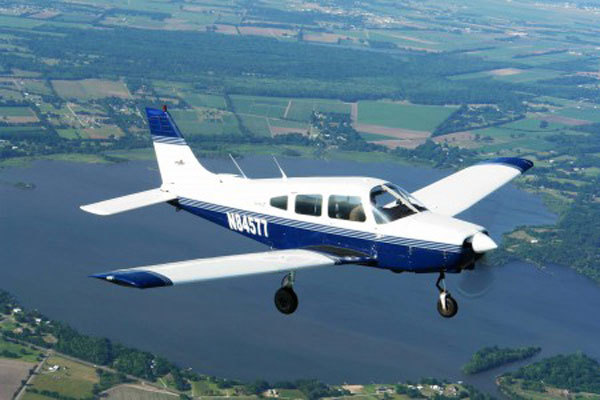

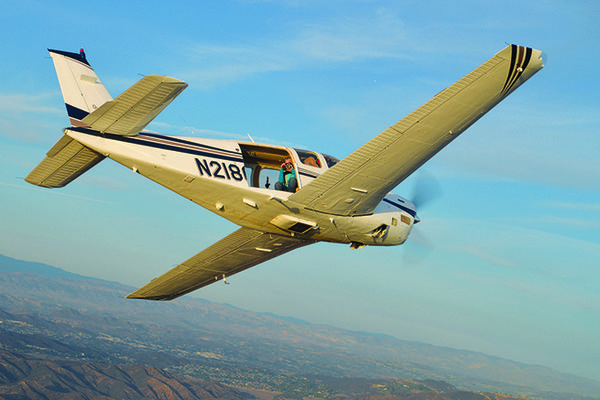
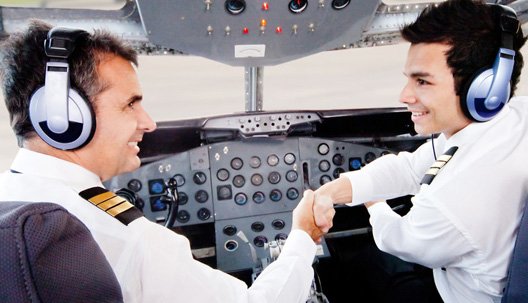 Many people dream of a career as a pilot but do not know how to go about it. However, there are some basic eligibility criteria and some steps which can help you to become a pilot and a different set of methods by which you can become a commercial airline pilot. This career is popular due to the glamor and prestige associated with it. A career as an airline pilot is also exciting and highly rewarding both in terms of money and job satisfaction. The actual process of becoming an airline pilot takes a long time and a lot of dedication. There are many precise requirements and it is quite expensive to establish a career as a pilot. For some positions you need 10 years of flying experience even to be able to apply. Let us look at some steps you can choose to follow your dream.
 The first requirement is a four year college degree which is necessary to be able to fly for a major airline if not for the regional airlines. It is advisable to get a bachelors degree in science with an emphasis on aviation. Then comes the airline pilot training which is expensive and intense.
 Find a flying school




 Pilot license cost varies a little depending on where you take your flight training and how quickly you learn to operate the aircraft to the level required to successfully pass your “check ride”, but we can still break down the costs involved to give you a ball park figure of how much you will need to pay.